A DOT inspection is not something you can wing. One missed violation can put your truck out of service, hit your CSA score, and cost you a load or your operating authority. The 2026 CVSA International Roadcheck recorded a staggering 32.8% out-of-service rate, nearly double the previous year. Roughly one in three inspected trucks was grounded on the spot.
That number isn’t a coincidence. It reflects carriers who weren’t prepared. If you operate in the United States, knowing the 8 levels of DOT inspection and exactly what each one targets is as important as knowing your route.
What Is a DOT Inspection?
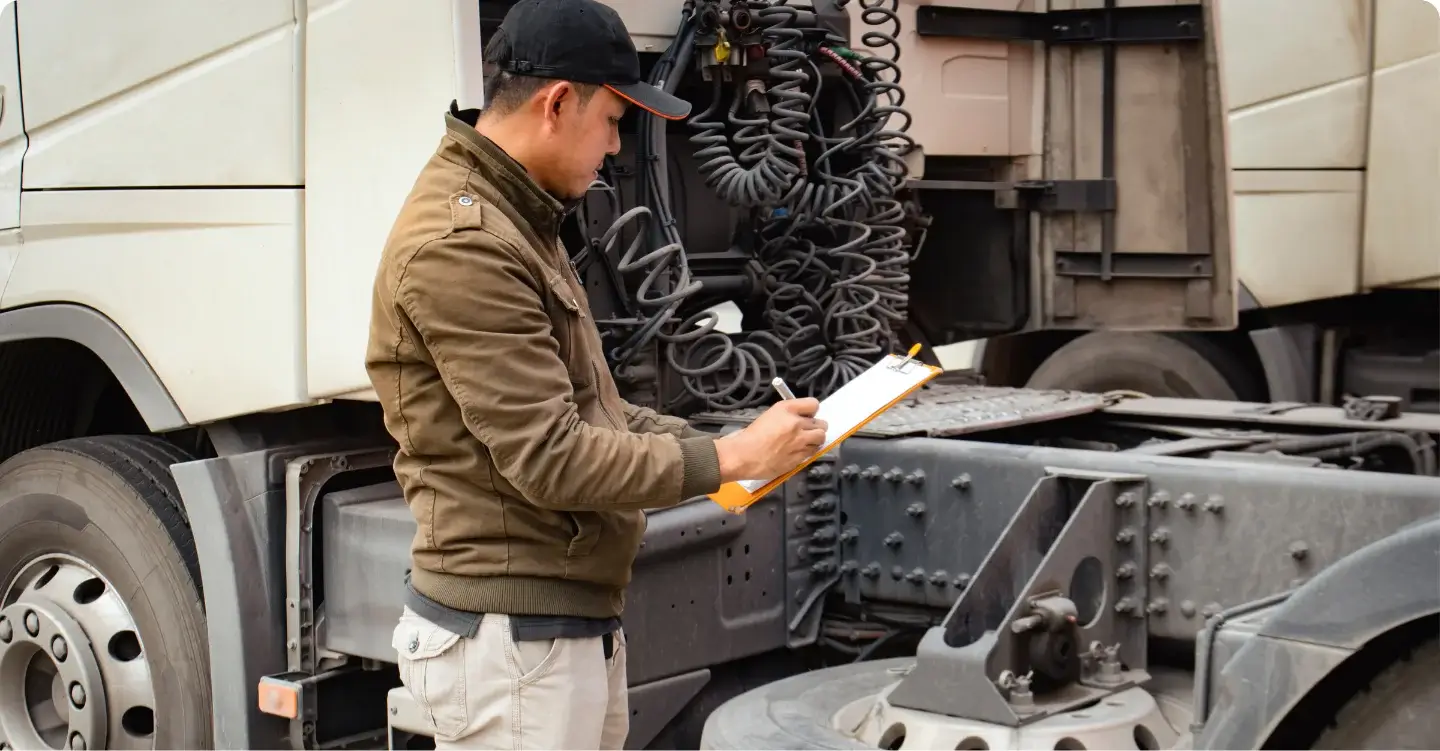
CVSA-certified enforcement officers conduct DOT inspections as official safety reviews to verify that commercial motor vehicles (CMVs) and their drivers comply with federal regulations. Officers carry out these inspections at weigh stations, roadside stops, border checkpoints, and carrier terminals. The FMCSA logs every inspection, clean or with violations, in its Safety Measurement System, and each one directly affects your CSA score.
All 8 Levels of DOT Inspection: Explained with Checklists
Level I – North American Standard Inspection
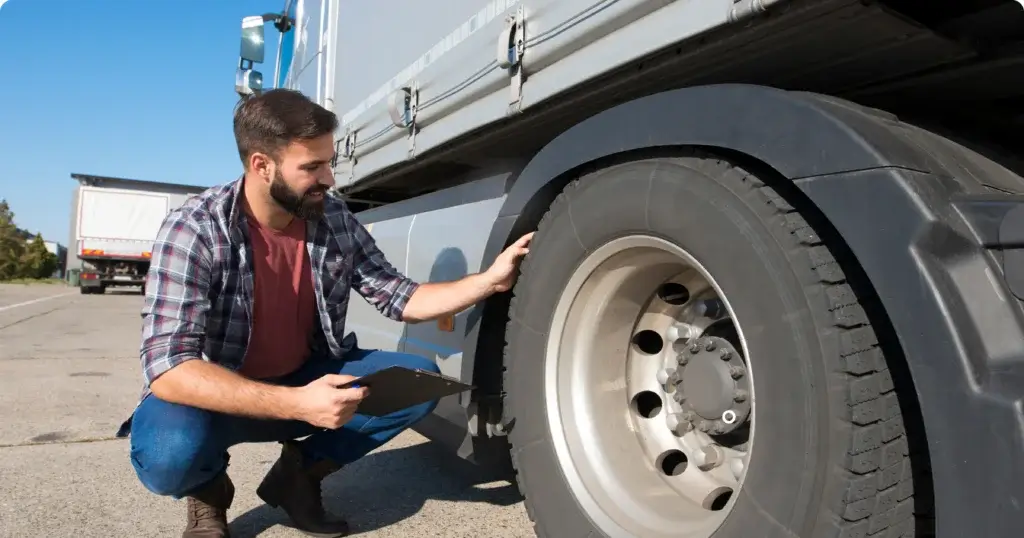
This is the most thorough inspection in the CVSA framework. It covers both the driver and every accessible part of the vehicle, including components underneath the truck.
Driver Checklist:
- Valid CDL and current Medical Examiner’s Certificate
- Hours-of-service logs or ELD records
- Driver Vehicle Inspection Reports (DVIRs)
- Alcohol and drug testing compliance
- Seat belt use and signs of fatigue or impairment
Vehicle Checklist:
- Brakes: air pressure, linings, drums, hoses, and push rod adjustments
- Tires, wheels, and rims: tread depth, inflation, and condition
- Lighting: headlamps, brake lights, turn signals, and clearance markers
- Steering mechanisms, suspensions, and frame integrity
- Exhaust, fuel systems, and driveline components
- Cab equipment: mirrors, windshield wipers, and seatbelts
- Cargo securement and hazmat compliance (where applicable)
Level I is the standard for most International Roadcheck events. In 2026, inspectors ran every truck through the full 37-step checklist regardless of the stated focus area.
Level II – Walk-Around Driver/Vehicle Inspection
Level II mirrors Level I in nearly every way, except that inspectors do not physically go under the vehicle. All visible components and driver credentials still receive the same scrutiny. Don’t treat this as a lighter version. Your ELD data, medical card, coupling devices, cargo, and lighting are all reviewed. If something looks off above the frame, the inspection escalates quickly.
Level III – Driver/Administrative Inspection
Level III focuses entirely on the driver. No mechanical violations are issued. Inspectors verify:
- Valid CDL and current medical examiner’s certificate
- Accuracy of hours-of-service records and ELD compliance
- Carrier identification, operating authority, and insurance status
- Seat belt use and visible signs of impairment
This level is common during quick roadside stops. In 2025, falsification of records of duty status ranked as the second most-cited driver violation nationwide. Five of the top ten driver violations that year were tied to HOS or ELD compliance. An inaccurate log, even an unintentional one, can result in an out-of-service order and civil penalties of up to $1,584 per day.
Level IV – Special Inspection
Level IV is a targeted, single-issue audit. It typically supports an FMCSA enforcement study or a campaign targeting a specific component or compliance trend, brake conditions, cargo securement hardware, or driver documentation. It does not constitute a full driver or vehicle review. Duration varies based on what is being examined.
Level V – Vehicle-Only Inspection
No driver is required for Level V. Inspectors examine the complete vehicle using the same checklist as Level I, brakes, air loss rate, tires, lighting, and all mechanical systems. This inspection typically occurs at carrier terminals or maintenance facilities and takes roughly 30 to 45 minutes. Your truck must pass on its own merit.
Level VI – Enhanced Inspection for Radioactive Shipments
Level VI applies exclusively to vehicles transporting Highway Route Controlled Quantities (HRCQ) of radioactive material or transuranic waste. It includes all elements of Level I plus specialized radiological checks, enhanced documentation requirements, and readings from calibrated equipment. As of January 1, 2005, the federal government requires all carriers transporting HRCQ materials to pass this inspection. The vehicle receives a special radiological symbol at the origin of the load, and the driver removes it at the destination. If your fleet does not haul radioactive cargo, this level does not apply to you.
Level VII – Jurisdictional Mandated Inspection
Level VII covers commercial vehicles that fall outside the scope of every other inspection level, school buses, taxis, limousines, shared-ride shuttles, and hotel courtesy vehicles. Each jurisdiction sets its own standards and inspector training requirements. A jurisdiction-specific decal is applied for this inspection.
Level VIII – North American Standard Electronic Inspection
Level VIII is the newest inspection type, and it’s changing how enforcement works. It is conducted entirely wirelessly while the vehicle is in motion, with no roadside stop and no officer interaction. Using data exchanged electronically, inspectors validate:
- Driver’s license class and endorsements
- Medical Examiner’s Certificate status
- Current HOS record of duty status and ELD compliance
- USDOT number and power unit registration
- Operating authority and Unified Carrier Registration (UCR) status
- Federal out-of-service orders
FMCSA’s operational testing began in 2024 and has since expanded to include ELD file data. If your ELD data is inaccurate or your credentials are out of order, Level VIII flags your vehicle for a physical stop, without warning.
How TruckX Prepares You for Every Level of DOT Inspection
You don’t build inspection readiness on the day of the stop; you build it into how you manage your operation daily.TruckX gives owner-operators and fleets the tools to stay compliant across every inspection level, without adding complexity.
FMCSA-Approved ELD
At Levels I, II, III, and VIII, your ELD data is one of the things inspectors review. The TruckX ELD One automatically records hours of service in real time, includes built-in DVIR, generates IFTA reports, and comes with a 4G SIM card included. Plug-and-play setup takes under a minute. It’s FMCSA-approved and trusted by over 100,000 drivers. With Level VIII inspections now pulling ELD data wirelessly in motion, accuracy isn’t optional; it’s your first line of defense.
Real-Time Fleet Visibility
TruckX’s fleet management app gives you a live dashboard of every truck, driver location, HOS status, remaining hours, and vehicle alerts, all in one place. Fleet managers can spot compliance gaps before they become roadside citations. For owner-operators running their own authority, that real-time visibility means fewer surprises.
AI Dashcam for Driver Safety and Documentation
TruckX’s AI dashcams monitor driver behavior and capture road-facing, in-cab footage, and rear sides. When a citation is disputed, you have timestamped, GPS-tagged video evidence. When driver behavior needs coaching, you have the data to back it up.
Asset Tracking Across Your Entire Fleet
TruckX asset trackers work on dry vans, reefers, chassis, and trailers. Pair them with door sensors and temperature sensors for complete cargo-level visibility, the kind of data that matters at Level I and V inspections, and during any cargo securement review.
One Clean Inspection Changes Everything
A clean DOT inspection improves your CSA score, builds carrier reputation, and keeps you moving. With the 2026 OOS rate at a record high, the fleets staying on the road are the ones that made compliance a daily habit, not a last-minute scramble.
TruckX makes that straightforward and affordable, whether you’re running one truck or a growing fleet. Ready to protect your operation? Book a demo with TruckX or call +1 (650) 600-6007 today.