One roadside inspection can turn a profitable run into a missed delivery. During CVSA’s 2026 International Roadcheck, nearly one in four vehicles receiving a Level I, II, or V inspection was placed out of service. For an owner-operator, that means the truck stays parked and the load waits until every critical violation is corrected. For owner-operators and small fleets, this kind of downtime is more than an inconvenience. It means lost revenue, a higher CSA score, and, in serious cases, a risk to your operating authority.
Every DOT inspection falls under one of eight standardized levels defined by the Commercial Vehicle Safety Alliance (CVSA). Understanding what inspectors check and building those requirements into your daily routine can give you more control over the outcome. This guide explains all eight levels and highlights the tools, including AI dashcams, that can support compliance, preserve evidence, and help you respond when a violation is issued.
What Is a DOT Inspection?
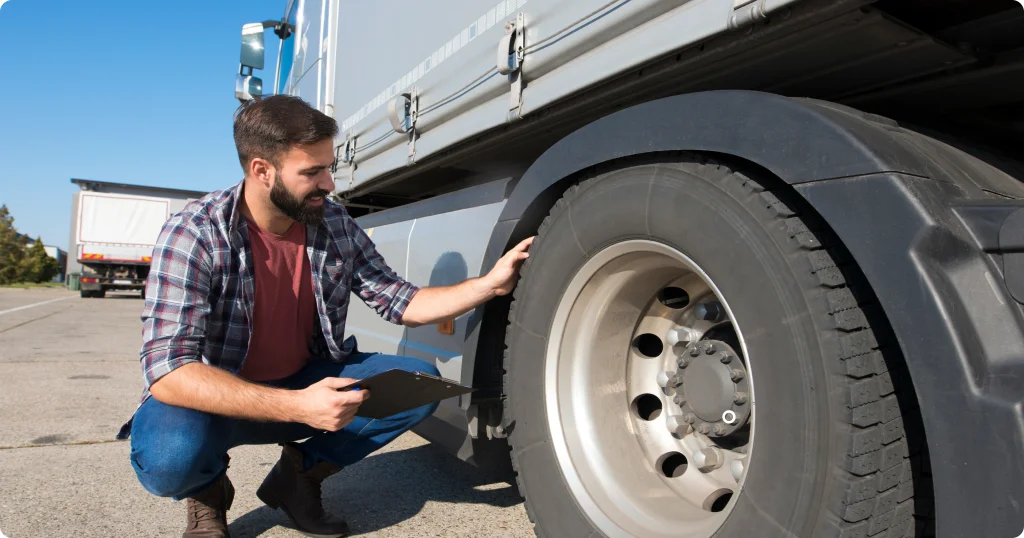
A DOT inspection is a safety examination conducted by a qualified commercial-vehicle inspector to determine whether a driver and vehicle comply with applicable safety requirements. Inspections may take place at weigh stations, roadside inspection sites, border crossings, or carrier facilities. In the United States, applicable inspection and violation data can feed FMCSA’s Safety Measurement System, which FMCSA uses to identify carriers that may require additional monitoring or intervention.
What Are the Eight DOT Inspection Levels?
The Commercial Vehicle Safety Alliance (CVSA) defines eight inspection categories. According to CVSA, inspectors conduct approximately four million commercial motor vehicle inspections across North America each year. These inspections range from comprehensive driver-and-vehicle examinations to specialized and electronic checks. The following definitions are based on CVSA’s official inspection guidance.
Level I: North American Standard Inspection
Level I is the most comprehensive roadside Inspection. It examines both the driver and the commercial motor vehicle. The driver inspection may include the driver’s license, record of duty status, hours-of-service compliance, seat-belt use, alcohol and drug checks, and required vehicle inspection reports. When applicable, the inspector also reviews the Medical Examiner’s Certificate and Skill Performance Evaluation (SPE) Certificate.
The vehicle inspection covers brake systems, tires, wheels, rims and hubs, lighting devices, steering mechanisms, suspension, coupling devices, driveline and driveshaft, exhaust and fuel systems, frame, windshield wipers, cargo securement, and other applicable components. The inspection may require the inspector to physically go underneath the vehicle.
Note: If pushrod travel cannot be measured on more than 20 percent of the exposed pushrods, the inspection cannot be classified as Level I and must be recorded as Level II.
Level II: Walk-Around Driver/Vehicle Inspection
A Level II inspection examines the driver’s credentials and many of the same vehicle components covered during a Level I inspection. However, it is generally limited to items that can be inspected without physically going underneath the commercial motor vehicle.
The inspection may cover brakes, tires, lights, cargo securement, coupling devices, suspension, steering, driver credentials, and hours-of-service records. Violations meeting the North American Standard Out-of-Service Criteria may result in the driver or vehicle being placed out of service.
Level III: Driver/Credential/Administrative Inspection
A Level III inspection focuses on the driver’s credentials and the carrier’s status rather than the vehicle’s mechanical condition. It may include the driver’s license, Medical Examiner’s Certificate and Skill Performance Evaluation (SPE) Certificate, when applicable; record of duty status; hours-of-service compliance; seat-belt use; vehicle inspection reports; and carrier identification and status. Applicable traffic violations or infractions may also be documented.
Level IV: Special Inspection
A Level IV inspection is typically a one-time examination of a specific item. It is generally conducted to support a study or to verify or refute a suspected safety trend. Because the focus varies, there is no single standard checklist for every Level IV inspection.
Level V: Vehicle-Only Inspection
Level V includes the vehicle components examined during Level I without requiring the driver to be present. It may be conducted at any location, including a carrier’s facility.
Level VI: Radioactive-Material Inspection
A Level VI inspection applies to select shipments of transuranic waste and highway route controlled quantities (HRCQ) of radioactive material. It includes an enhanced Level I inspection, additional radiological requirements, and specialized out-of-service criteria. Vehicles transporting covered shipments must pass the inspection before continuing in transit.
Level VII: Jurisdiction-Mandated Inspection
Level VII covers an inspection program mandated by a jurisdiction that does not meet the requirements of another inspection level. Examples include programs for school buses, limousines, taxis, shared-ride transportation, hotel courtesy shuttles, and certain intrastate or intra-provincial operations. Each jurisdiction determines its inspector-training requirements. A Level VII inspection cannot result in a CVSA decal, although a jurisdiction-specific decal may be issued.
Level VIII: North American Standard Electronic Inspection
Level VIII is conducted electronically or wirelessly without direct interaction with an enforcement officer. Its defined data points include driver identity, license and medical status, RODS, HOS compliance, carrier identification, registration, operating authority, and applicable out-of-service orders. However, FMCSA and CVSA are currently evaluating Level VIII inspections through an operational test, so they are not yet a routine nationwide inspection process.
Why an AI Dashcam Is Now Part of Passing Every Inspection Level
Most owner-operators think of dashcams as accident protection. That’s true but it overlooks how critical video evidence has become in inspections and CSA disputes. During a Level I, II, or III inspection, officers can question your driving behavior, following distance, phone use, seatbelt compliance, alongside your paperwork. Without footage, your word is the only defense you have. With a truck dashcam running road-facing and driver-facing views, you have timestamped, GPS-tagged video that backs up your account instantly.
This matters even more once Level VIII inspections flag your truck for further review. Video evidence can give you the proof needed to challenge a citation before it affects your CSA score. For small fleets juggling managing trucks, an AI dashcam for trucks also means fewer unexplained claims and faster insurance resolution when something happens on the road.
How TruckX’s AI Dashcam Fits Into Your Compliance Stack
TruckX’s 2-Channel and 4-Channel AI Dashcam Pro models capture road-facing and in-cab footage, while the 4-Channel model adds side and rear views. ADAS and driver-monitoring features can help identify distraction, drowsiness, and unsafe following behavior. GPS and timestamp information can also help safety teams locate relevant footage during incident reviews and driver coaching.
For owner-operators, this creates an additional record of events on the road. For fleet managers, it can provide useful coaching data and help identify recurring risky behaviors.
Pairing the Dashcam With FMCSA-Approved ELD Data
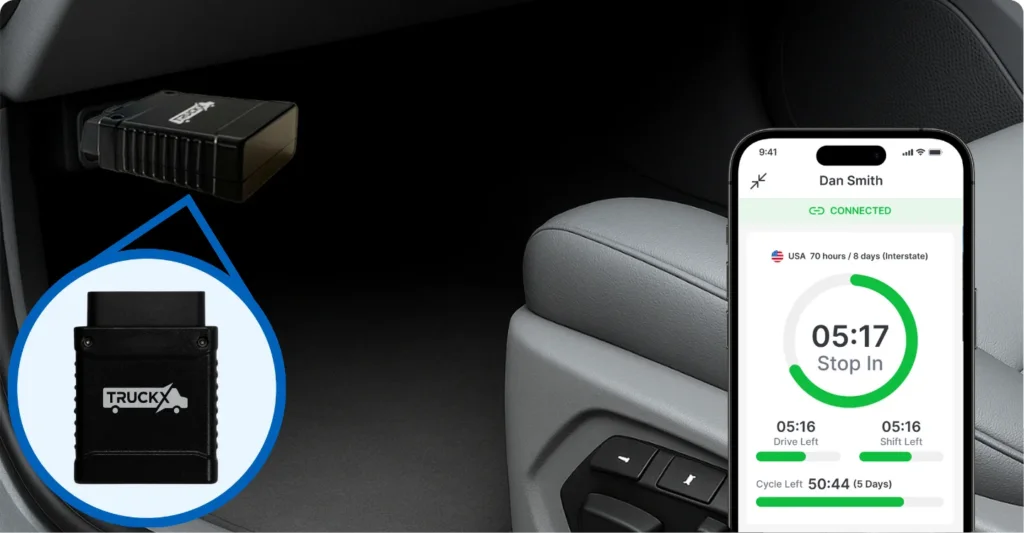
Levels I, II, and III may include a review of the driver’s record of duty status and hours-of-service compliance. For drivers subject to the ELD rule, an FMCSA-registered ELD can make those records easier to display or transfer during an inspection.
TruckX ELD One supports hours-of-service recordkeeping, DVIR workflows, and fleet reporting. When used alongside dashcams and asset-tracking tools, it can give fleet managers a more connected view of driver activity, vehicle operations, and equipment location. These tools can support preparation and internal oversight, but they do not replace the driver’s responsibility to review, annotate, and certify required records.
Building Inspection Readiness Into Your Daily Routine
The fleets with the lowest out-of-service rates don’t prepare for inspections. They operate inspection-ready every day. That means a pre-trip check that actually catches lighting and tire issues, an ELD that logs accurately without driver intervention, and video evidence running in the background in case something goes wrong. Build that habit once, and every one of the eight inspection levels becomes routine instead of a scramble. Support your fleet’s inspection readiness with ELD, AI dashcam, and fleet management solutions from TruckX.com. Call +1 (650) 600-6007 to discuss your fleet’s needs.