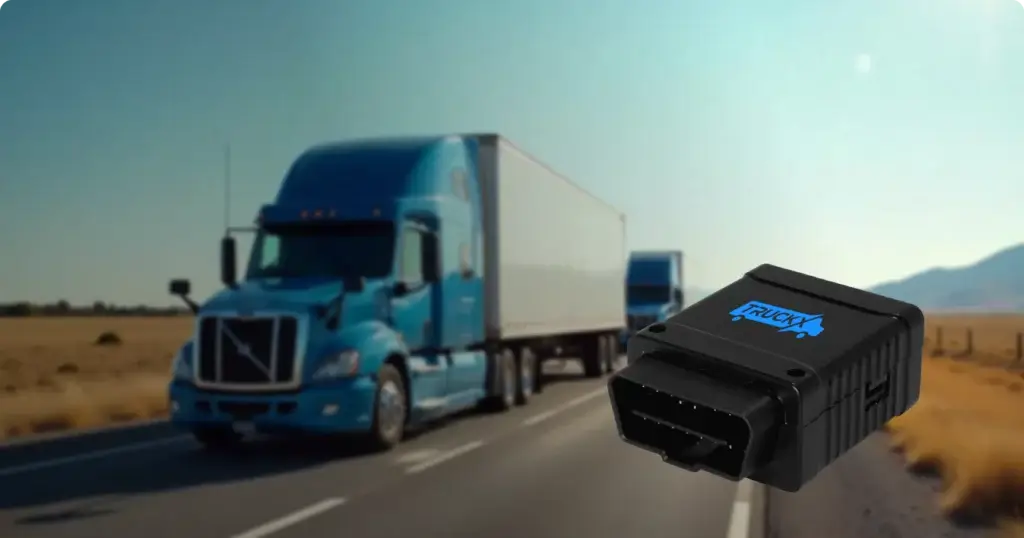
Box truck operations are growing fast across the United States. From local deliveries to regional freight, box trucks now play a critical role in modern logistics. With that growth comes stricter compliance expectations. One of the most important requirements is the use of an Electronic Logging Device (ELD). For owner-operators and fleets, understanding ELD compliance is essential for avoiding violations, improving fleet visibility, and running a more efficient operation.
This guide explains what box truck operators need to know about ELDs, who must use them, and how the TruckX platform helps simplify compliance while improving day-to-day operations.
What Is an ELD and Why Does It Matter for Box Trucks
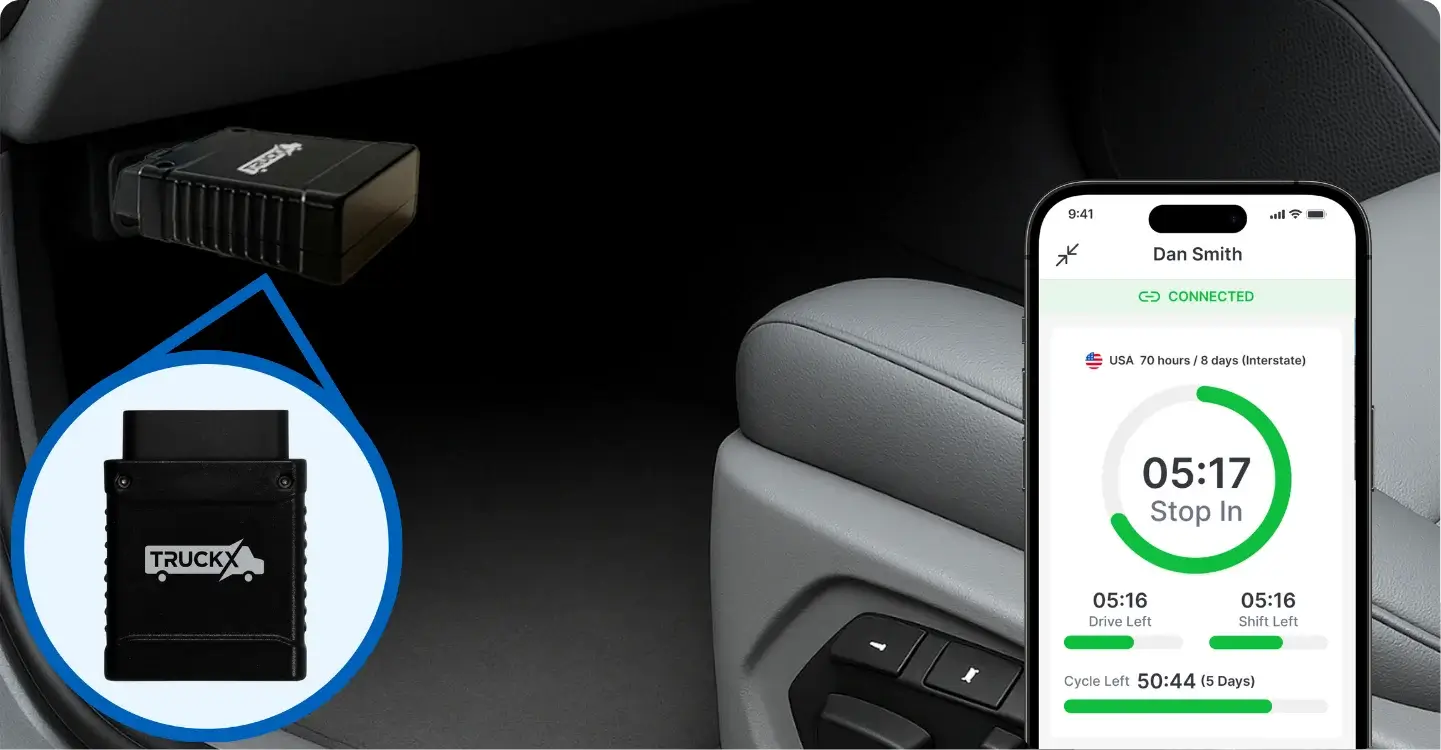
An Electronic Logging Device is a system that automatically records a driver’s Hours of Service (HOS). It connects directly to the vehicle’s engine to track driving time, engine hours, miles driven, and vehicle movement.
Unlike paper logs, ELDs reduce errors and eliminate manual log manipulation. For box truck operators, this means fewer compliance risks and more accurate records during roadside inspections. ELDs also bring operational benefits. They provide real-time visibility into driver activity, improve scheduling accuracy, and reduce administrative workload.
Are Box Trucks Required to Use an ELD?
Not every box truck is required to use an ELD, but many do.
When ELDs Are Mandatory
Box trucks must use an ELD if they meet all of the following conditions:
- The vehicle has a GVWR or GCWR of 10,001 pounds or more
- The operation is commercial in nature
- The driver is required to maintain Records of Duty Status (RODS)
- The vehicle is not operating under a valid exemption
Most interstate box truck operations fall under these rules, especially those involved in freight delivery, retail distribution, or contract hauling.
Common ELD Exemptions for Box Trucks
Some box truck operators may qualify for exemptions:
- Short-haul exemption (100 or 150 air-mile radius, depending on operation)
- Pre-2000 engine model year vehicles
- Driveaway-towaway operations
- Drivers who log fewer than 8 days in 30 days
Even when exempt, many fleets still voluntarily adopt ELD for improved visibility and operational control.
Key Benefits of Using an ELD for Box Truck Fleets
1. FMCSA Compliance
An FMCSA-compliant ELD ensures accurate HOS tracking and reduces violations related to log falsification, form errors, and missing entries.
2. Reduced Administrative Work
Dispatchers and fleet managers no longer need to chase paper logs. Logs are available instantly, digitally, and ready for audits.
3. Better Driver Accountability
Drivers spend less time logging and more time driving. Clear records reduce disputes and improve trust between drivers and managers.
4. Real-Time Fleet Visibility
TruckX ELD goes beyond compliance. It shows vehicle status, GPS tracking, trip progress, etc in real time.
How TruckX ELD and Fleet Management Help Box Truck Operators
TruckX offers more than an ELD. It delivers a complete fleet management system designed for real-world trucking operations.
1. FMCSA-Compliant ELD
TruckX ELD is fully FMCSA compliant and easy to install. Drivers can learn and install quickly. Fleet managers can monitor compliance without complexity.
2. Real-Time GPS Tracking and Trip Visibility
With TruckX, box truck fleets gain live location tracking. Dispatchers know where vehicles are, how long stops last, and when deliveries will be completed.
3. Automated HOS, DVIR, and IFTA Support
TruckX automates critical compliance workflows:
- Hours of Service tracking
- Driver Vehicle Inspection Reports (DVIR)
- Mileage data for IFTA reporting, and much more
4. Fleet-Wide Insights for Smarter Decisions
TruckX provides actionable insights into utilization, idle time, route efficiency, and driver behavior. These insights help fleets reduce costs and improve productivity.
5. Scalable for Growing Fleets
Whether you operate one box truck or fifty, TruckX scales with your business. The same platform supports owner-operators, local delivery fleets, regional carriers, etc.
Choosing the Right ELD for Box Trucks
When selecting an ELD, box truck operators should look beyond price.
A reliable solution should offer:
- FMCSA certification
- Easy installation and driver adoption
- Strong customer support
- Fleet management features beyond basic logging
- Cloud-based access and real-time reporting
TruckX meets all these requirements while remaining cost-effective for fleets of all sizes.
Final Thoughts
ELD compliance is no longer just about avoiding fines. For box truck fleets, it is a foundation for efficiency, visibility, and growth. Fleets that use ELD data strategically gain better control over operations, reduce downtime, and improve customer service. When combined with a powerful fleet management platform, an ELD becomes a tool for smarter decision-making, not just compliance.
For U.S. box truck owner-operators and growing fleets, adopting the right ELD and fleet management solution today sets the stage for long-term success. Explore our Fleet Management and ELD Solutions at TruckX.com or call +1 (650) 600-6007 today to discover more.